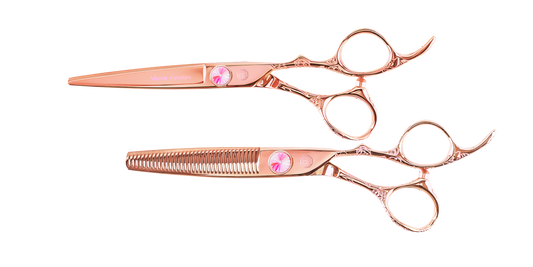
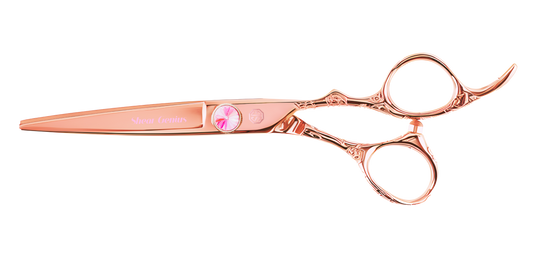
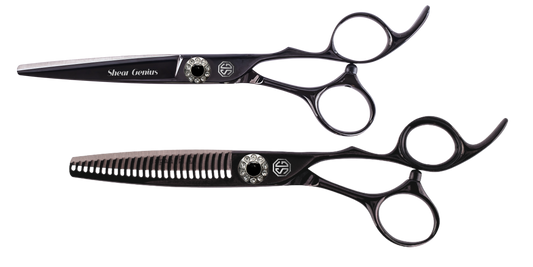
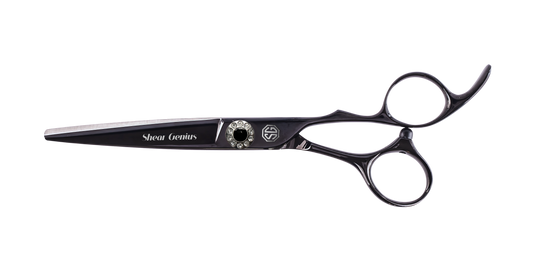
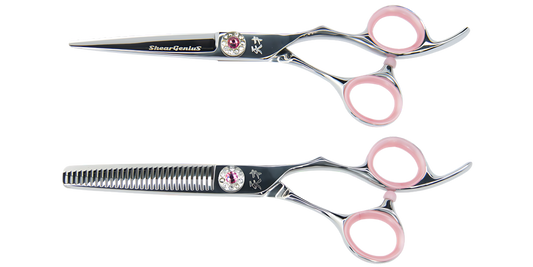
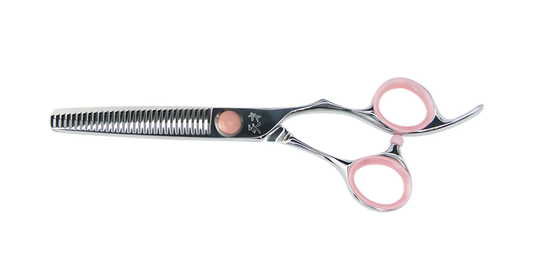
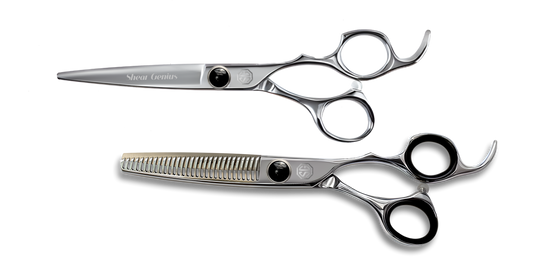
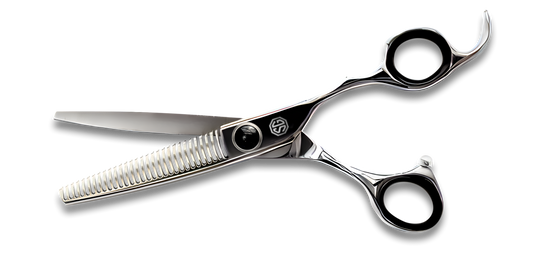
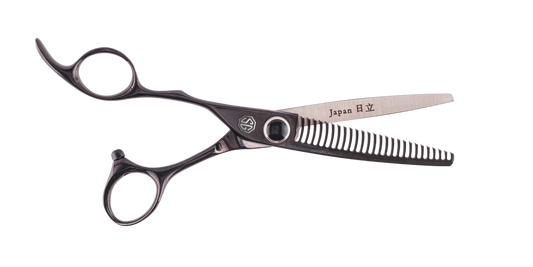
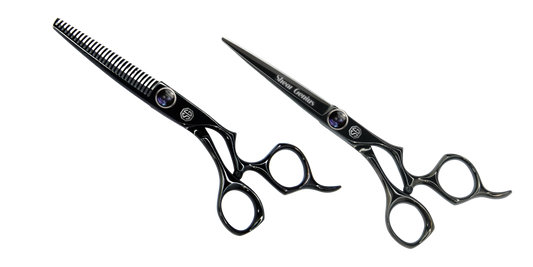
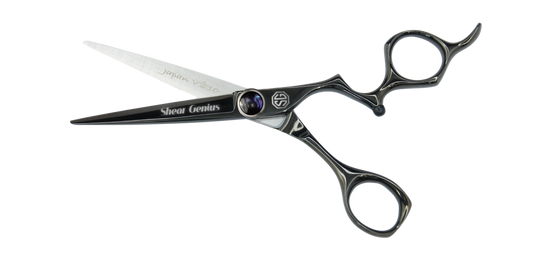
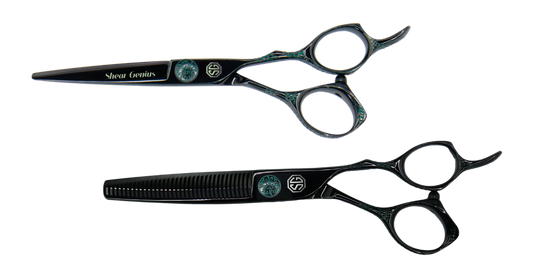
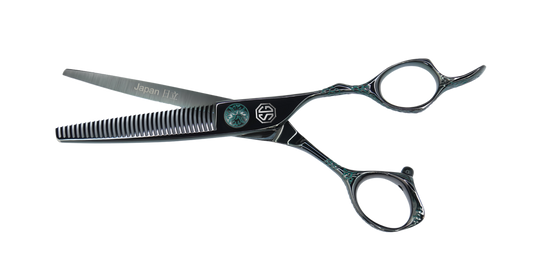
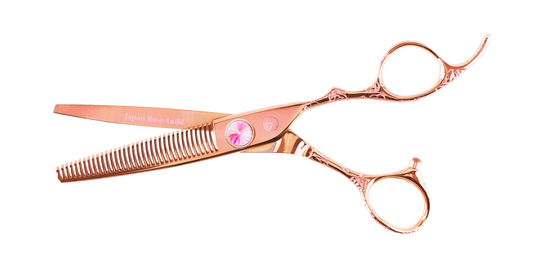
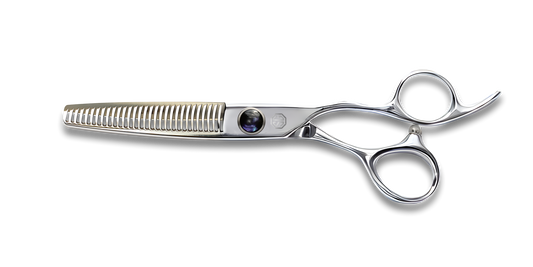
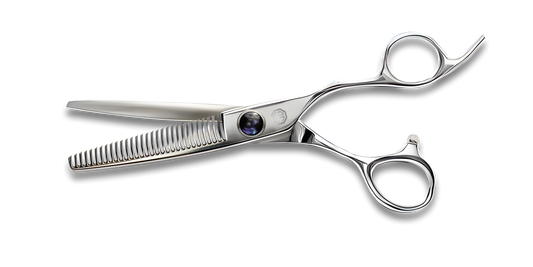
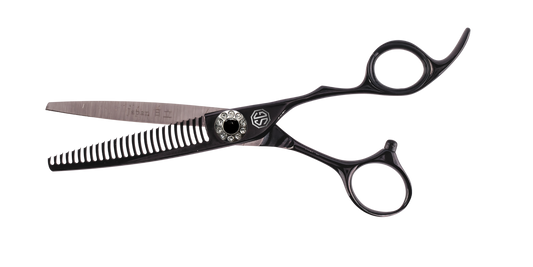
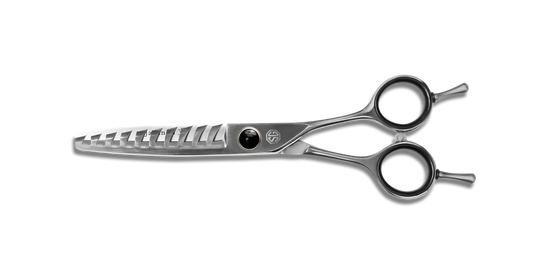
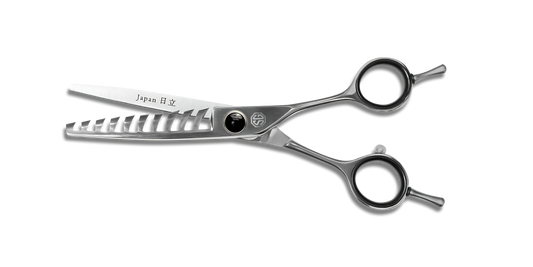
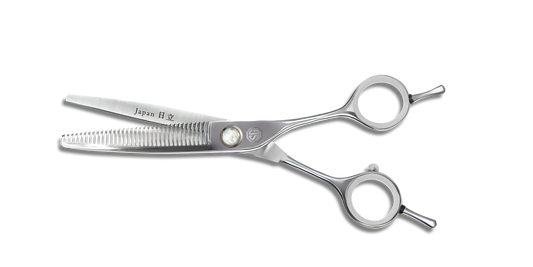
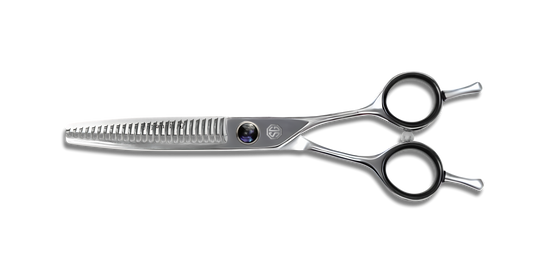
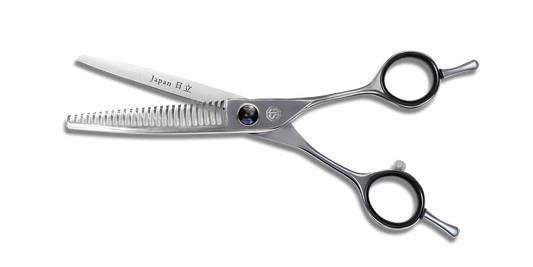
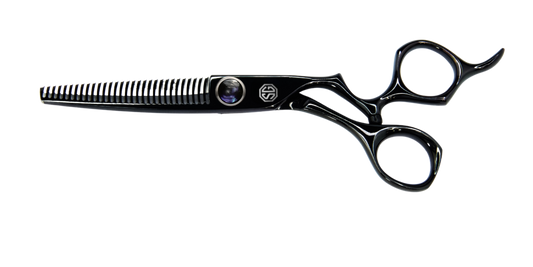
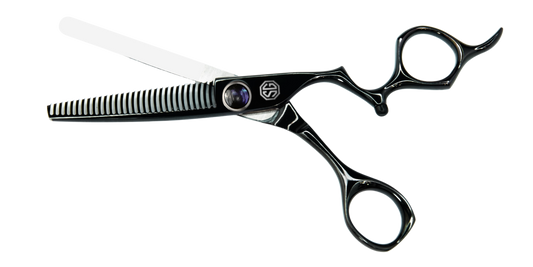
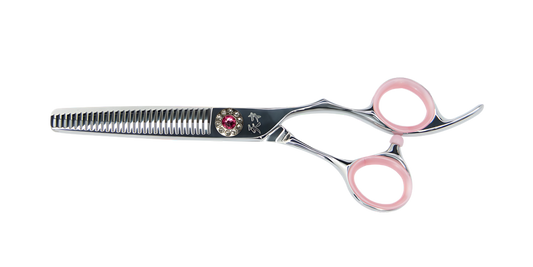
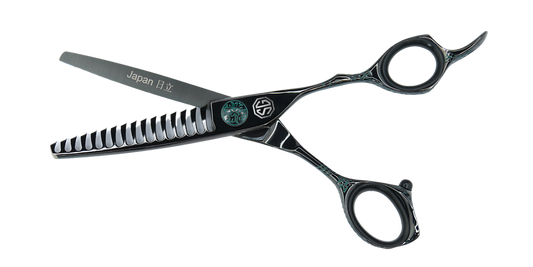
A thinning scissor is how a hairdresser removes weight without removing length. Done right, it's invisible. Done wrong, it's a ruined cut. These are the models Matt Grumley — ShearGenius founder and Scissorsmith with 35+ years in the industry — stocks, sharpens by hand, and stands behind.
What makes a thinning scissor worth buying
Three things:
-
Steel. ShearGenius thinners use Japanese Hitachi ATS-314 cobalt-molybdenum steel or Japanese Cobalt Alloy. That means the teeth hold their edge through thousands of cuts without rolling — the single most common failure point on a cheap thinner.
-
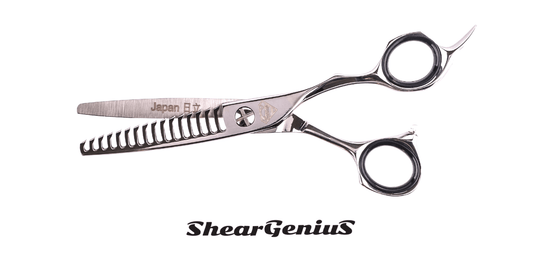
Tooth geometry. A 30-tooth thinner removes roughly 30% of the hair per closure; a 14-tooth texturiser removes more per tooth and creates coarser movement. Matching the tooth count to the cut is half the craft.
-
Scissorsmith setup. Every thinner is hand-tensioned and edge-finished by Matt before it ships. Factory default is never where a thinner feels best — it's always tuned.
Choosing between thinning, texturising and chunking scissors
The terms overlap. Here's how Matt separates them for a working hairdresser:
-
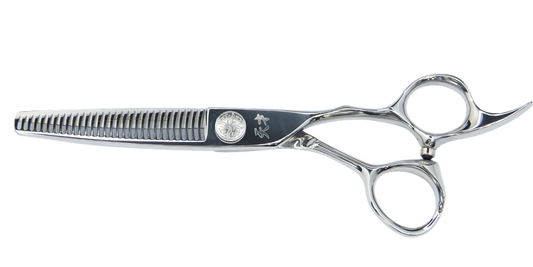
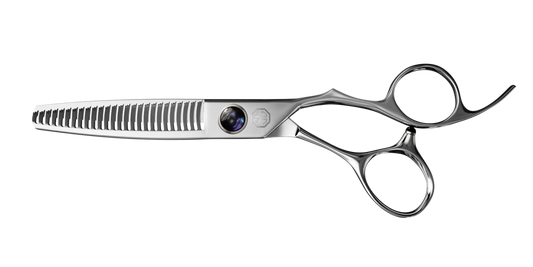
Thinning scissors — 28–40 teeth, even spacing. For general weight removal on medium-to-thick hair. Most common day-to-day.
-
Texturising scissors — 14–22 teeth, often wider gaps. For creating movement and soft transitions, especially in layered cuts.
-
Chunking scissors — 6–12 teeth, very wide. Aggressive weight removal or creating deliberate jagged finishes.
If you're buying your first thinner, choose a 30-tooth Japanese-steel model in a blade length that matches your cutting scissor (usually 5.5" or 6"). If you already have a 30-tooth and you're building your kit, the 14-tooth texturiser is the next addition.
Why Australian hairdressers buy their thinners from ShearGenius
-
Matt personally inspects every scissor — pivot, tension, edge, alignment — before it ships. Not a batch inspection. Each scissor, by hand.
-
Australia-wide mail-in sharpening service — sharpening a thinner is much harder than sharpening a straight scissor; teeth have to be matched individually. Matt does this in-house.
-
SlicePay — zero-interest weekly instalments for Australian hairdressers. Spread a premium thinner over 20 weeks.
-
Mobile sharpening run across VIC, TAS, and SA — your thinner gets serviced without leaving your salon.
Frequently asked questions
What's the difference between thinning scissors and thinning shears?
Same tool, different name. “Thinning scissors” is the common term in Australia and the UK; “thinning shears” is more common in the US. Both describe a toothed scissor designed to remove weight from the hair without removing length.
How many teeth should a thinning scissor have?
For general hairdressing: 28–40 teeth removes around 25–35% of the hair per closure — the versatile range. For softer texturising work: 14–22 teeth. For chunking: fewer than 12. If you can only own one, pick a 30-tooth Japanese-steel model.
What blade length should a thinning scissor be?
Match it to your main cutting scissor. If you cut with a 5.5" or 6" scissor, get a 5.5" or 6" thinner. The two should pair in your hand without forcing a grip change. ShearGenius thinners come in 5.5", 6" and 6.5" blade lengths.
Can I sharpen a thinning scissor myself?
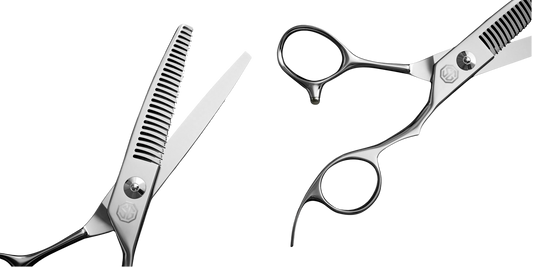
No. Thinner teeth need to be sharpened individually with the correct angle on each one. Done wrong, you'll either remove the teeth or set the angles inconsistent across the blade. Send it to a Scissorsmith — ShearGenius runs an Australia-wide mail-in service plus mobile sharpening across VIC, TAS, and SA.